

Contrary to popular belief, debits and credits don’t always mean “good” or “bad.” Instead, they represent increases or decreases in different accounts. Debits are recorded on the left side of an account, while credits are recorded on the right side. The specific rules for debits and credits depend on the account type, such as assets, liabilities, equity, revenues, and expenses. It may take a bit of practice to fully grasp, but once you understand the basic rules, you’ll have a solid foundation for recording and analyzing financial transactions.
- That’s the big picture, but let’s take a closer look at what double-entry accounting means in practice, and why it’s still the backbone of reliable bookkeeping today.
- On the other hand, it’s easy to track accounting errors and issues in a double-entry bookkeeping system when the credit and debit sides don’t tally.
- Auditors and investigators may require additional time and effort to untangle complex transactions and identify discrepancies.
- Free accounting tools and templates to help speed up and simplify workflows.
- This method provides a more complete picture of a business’s finances and is typically used by larger businesses.
Statement of Changes in Equity and Its Importance with Practical Examples

The concept was discovered and formally documented by Luca Pacioli, a monk from Venice who included double-entry in his encyclopedia on math in 1494. It is believed that the publication of Pacioli’s book helped to popularize the idea of double-entry bookkeeping. Assets represent the economic resources owned or controlled by the company that have future economic value, such as Cash, Accounts Receivable, and Equipment. Liabilities are the obligations the company owes to external parties, including Accounts Payable, Salaries Payable, and Notes Payable.
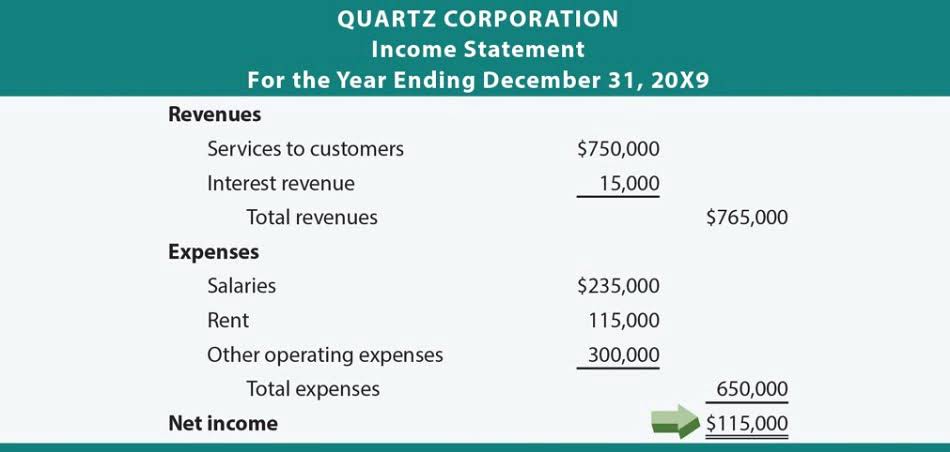
Example of a Double-Entry Bookkeeping System
It is a simple and straightforward method of keeping track of financial transactions. However, single-entry accounting does not provide the same level of detail as double-entry accounting. This is a report that lists all of the accounts in the ledger and their balances. Record Keeping for Small Business The purpose of the trial balance is to ensure that the total of all debit balances equals the total of all credit balances. If the trial balance does not balance, it indicates that there is an error in the books that needs to be corrected. A debit is used to record an increase in assets, expenses, and losses, and a decrease in liabilities, revenues, and gains.
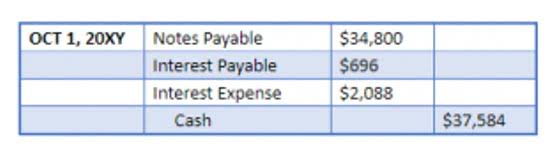
What is the difference between books and double-entry bookkeeping?
When you deposit $15,000 into your checking account, your cash increases by $15,000, and your equity increases by $15,000. When you receive the money, your cash increases by $9,500, and your loan liability increases by $9,500. In a double-entry accounting system, credits are offset by debits in a general ledger or T-account. The Credit Card Due sub-ledger would include a record of the other half of the entry, a credit for $5,000. The general ledger would have two lines added to it, showing both the debit and credit for $5,000 each.

What Is the Basic Rule of Double-Entry Bookkeeping?
- In single-entry accounting, when a business completes a transaction, it records that transaction in only one account.
- Manually managing debits and credits is no longer realistic when you’re serving multiple clients.
- Popular platforms like QuickBooks, Xero, and FreshBooks offer cloud-based solutions that make it easier for businesses to manage their accounts.
- When you deposit the money, your cash account increases (debit) by $1,000, and your revenue increases (credit) by $1,000.
- On the contrary, the latter is about making two entries simultaneously to two different accounts and marking both the debit and credit sides.
Once your journal entries are recorded, the next step is to verify and post them to the general ledger. This is where each account, cash, accounts receivable, sales revenue, utilities expense, and so on, gets updated. The system dates back to the 1400s, when an Italian mathematician named Luca Pacioli, often called the “Father of Accounting,” described it in his writings. Over 500 years later, the double entry accounting same principle of balance makes double-entry indispensable for producing error-free books, accurate financial statements, and audit-ready records.
Revenue Forecasting: 5 Quantitative + 3 Qualitative Methods
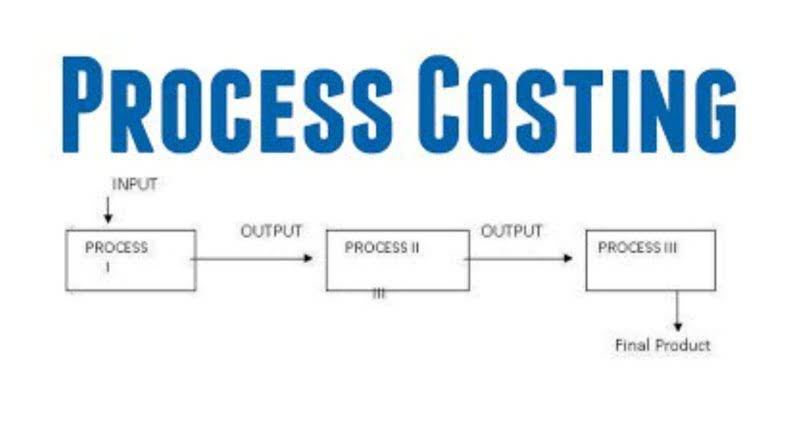
It ensures that the total debits equal the total credits, verifying the accuracy of the recorded transactions. If the trial balance is in balance, it provides confidence that the double entry accounting has been executed correctly. However, if there is a discrepancy, it indicates an error in the recording or posting of the transactions, which needs to be identified and resolved. In the double entry QuickBooks accounting process, the first step is to record transactions.